UV Rotary Printing
UV Printed Tumblers, Bottles & Glassware
Full color, direct onto the cup. No screens. No setup fees. No limits on how many colors your artwork uses.
UV rotary printing is the method behind every photo-quality, full-wrap tumbler you've seen and wondered how they pulled off. It lays CMYK + white + clear varnish directly onto the curved surface of a cup, cures it with UV light in seconds, and holds up in a commercial dishwasher.
Some decorators call this "digital printing" or "direct-to-object." The accurate name is UV rotary — UV-cured, rotary-indexed, full-color printing on cylindrical drinkware. We run it in-house, every day.
The Method
What UV Rotary Printing Actually Is
A rotary UV printer spins the cup on a precision mandrel while a print head lays down ink one pass at a time. The ink is UV-reactive — liquid on the way out of the nozzle, cured into a hardened film the instant an LED-UV lamp hits it. No kiln. No heat press. No transfer paper. The ink is on the cup, not adhered to a coating or transferred off a carrier sheet.
Because the printer is digital, every color your file uses prints in a single pass. You're not paying per screen, per color, or per Pantone. Gradients, photographs, tiny text, multi-color logos — they all go down the same way, at the same price.
That's the short version. The long version is what makes the difference between a print that peels in a month and a print that's still on the cup after hundreds of washes.
Full-Color 360° Wraps on Insulated Tumblers
We print a full-color 360° wrap around the whole cup, or a partial print on one side if that's all your design needs. The rotary printer runs CMYK plus white plus clear varnish at 1200 dpi on double-wall insulated tumblers (20oz, 30oz and larger, powder-coated or raw stainless), up to 5.1 inches in diameter with up to 14.1 inches of print length. If your promotional tumbler artwork runs all the way around the cup, this is the method we'd use.
What We Print On
Direct to the substrate. No coating required on the cup itself.
Stainless Steel
Powder-coated and raw. The full range of double-wall insulated tumblers — 20oz, 30oz, and beyond.
Get a quote arrow_forwardGlass
Clear, frosted, and colored. Pint glasses, growlers, wine bottles, beer bottles, mason jars.
Get a quote arrow_forwardPlastic
Sports bottles, squeeze bottles, acrylic tumblers, stadium cups.
Get a quote arrow_forwardYour own drinkware. Ship us stock you already own from any brand and we will print it. We verify fitment on a sample first, so nothing gets printed until we know the piece seats true on the rig.
Shapes and Sizes We Handle
Straight-walled and tapered cylinders. If your substrate is outside stainless, glassware, or plastic, ask us — we'll tell you straight if UV rotary is the right call, or point you to a method that is.
Real Work, Real Clients
UV Rotary in the Wild
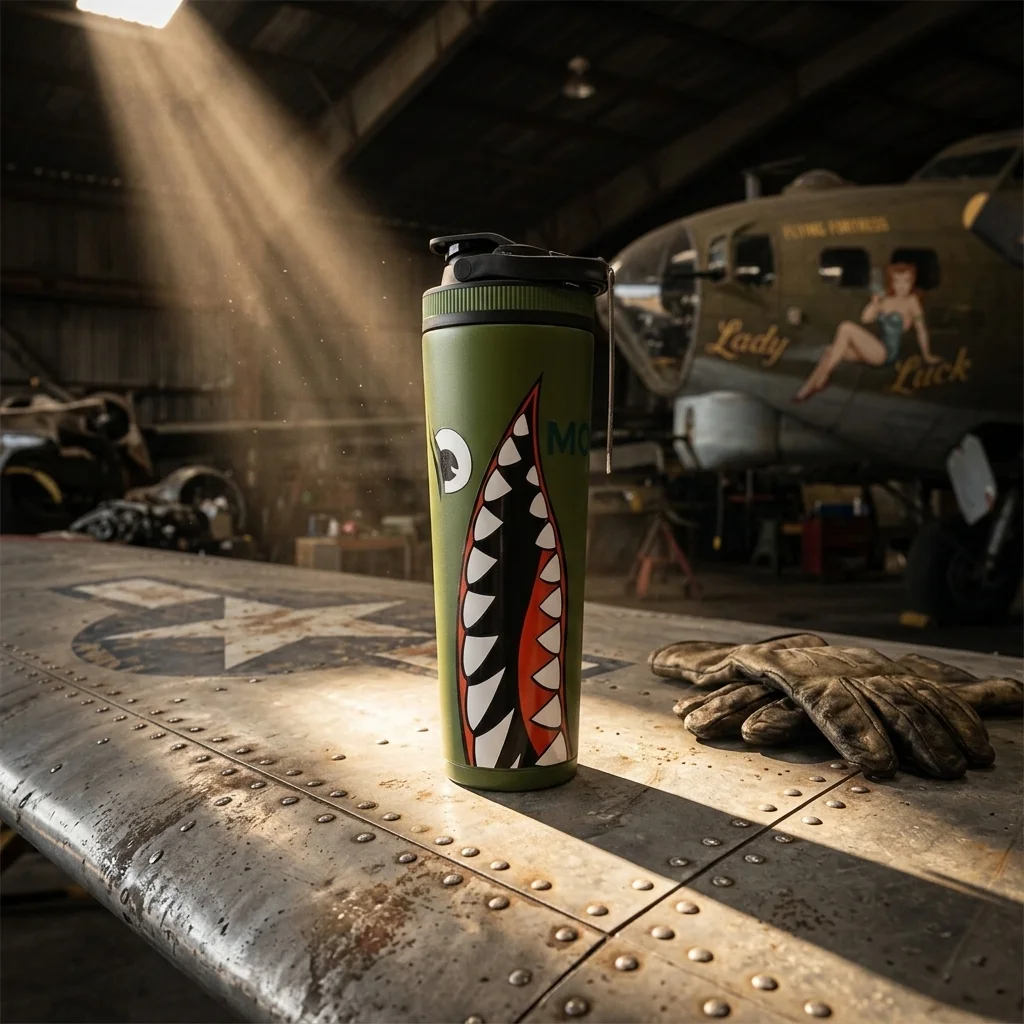
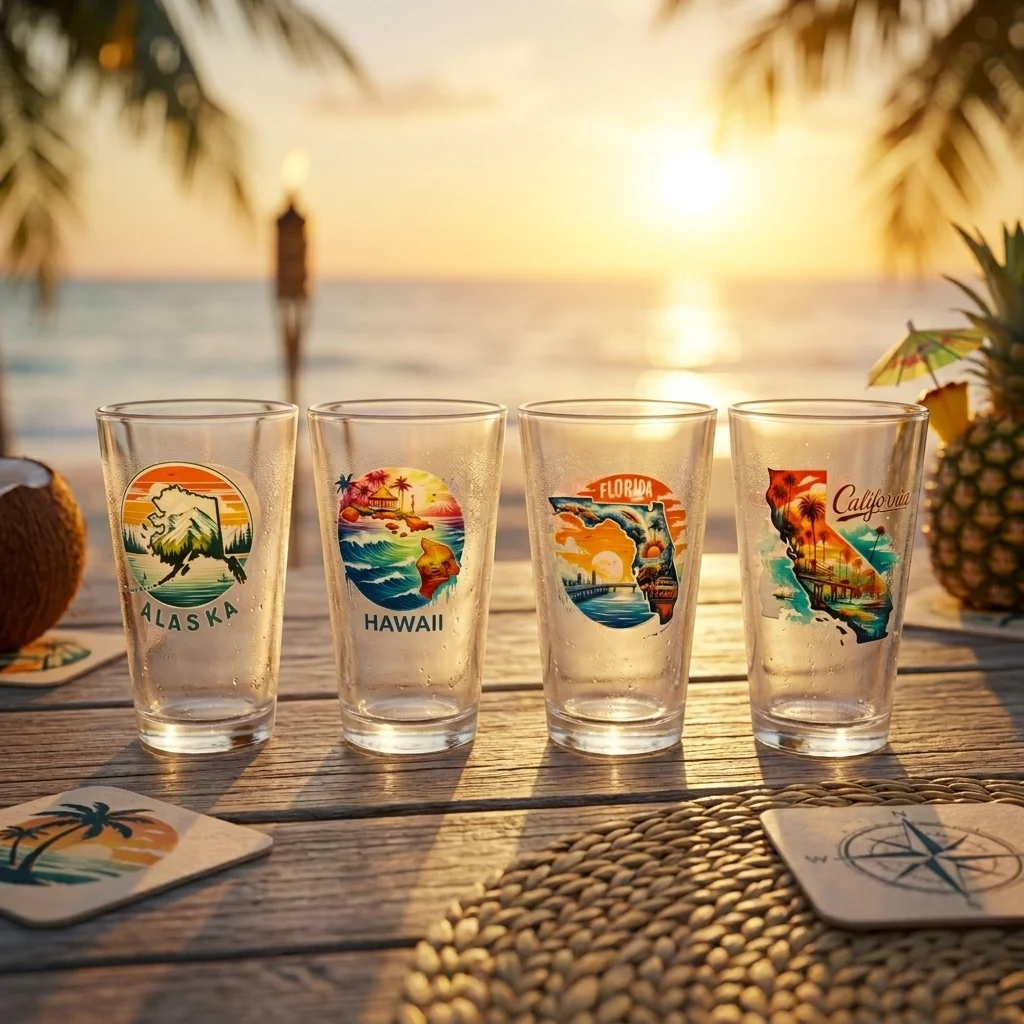
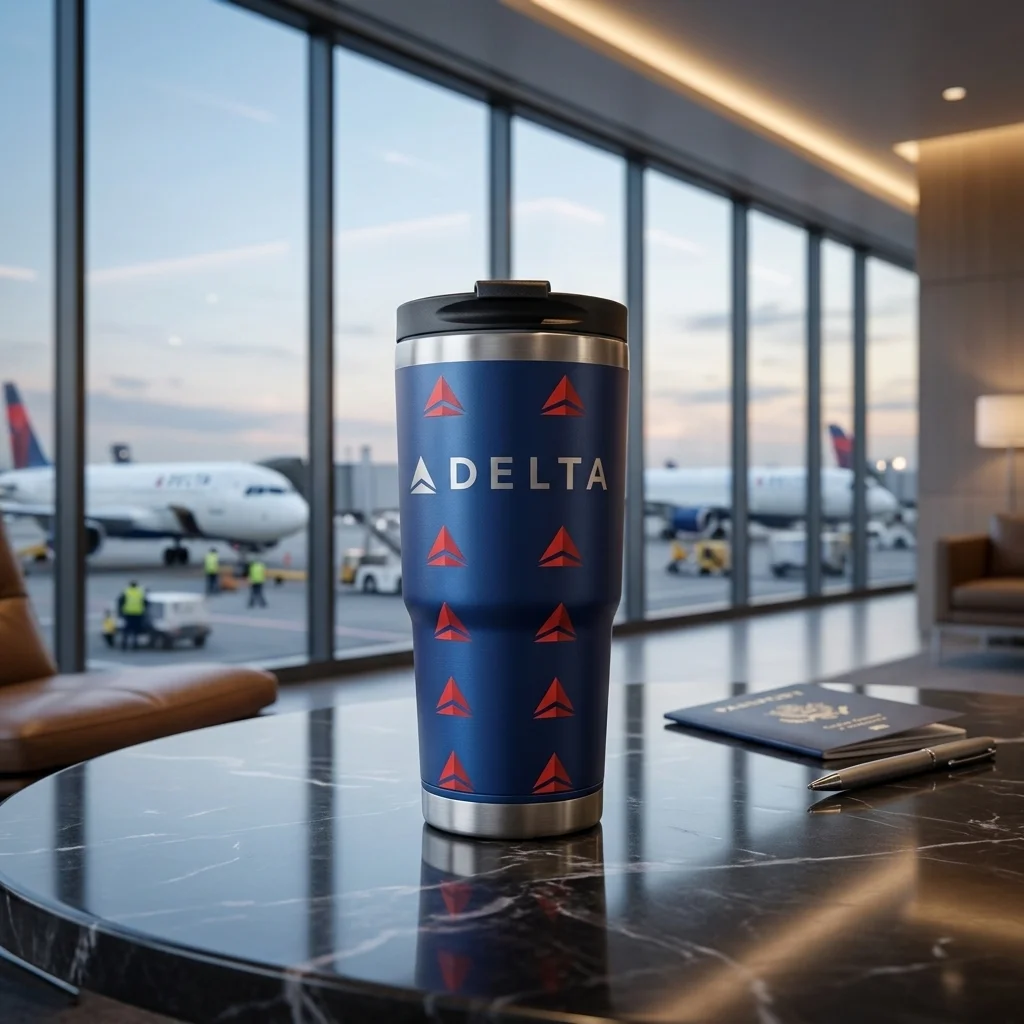
Full-color, photo-quality prints straight off our rig.
What's in Our Ink System
CMYK + White + Clear Varnish
Six channels, laid down in a single pass. White gives you opaque color on dark stainless, tinted glass, and colored substrates. Varnish is optional — it adds depth and a touch of gloss on top of the art.
1200 dpi Resolution
Photo-quality on a cup is not an exaggeration — it's what the printer does. The limit is your source file, not our rig.
LED-UV Cure
Narrow UV band, room-temperature around it. Tempered glass stays tempered. Powder coat doesn't scorch. No detempering, no thermal stress.
Prop 65 & Food-Grade Inks
The same inks on every piece that leaves our facility. Prop 65 compliant, with safety data sheets for every color.
No screens to burn. No plates to etch. No per-color fee. Change the file, change the print — that's it.
Where UV Rotary Wins — and Where It Doesn't
Where It Wins
- Full-color artwork. Photos, gradients, illustrations, multi-color logos — unlimited colors in a single pass.
- Short and mid-size runs. 50, 500, or 5,000 pieces. The per-piece price is the per-piece price — no setup fees amortizing across a big run.
- Variable-data runs. Names, numbers, event dates, unique QR codes. Every cup can be different without slowing the line.
- Pantone-accurate color on digitally-controlled output — no batch-to-batch drift from hand-mixed inks.
- Commercial dishwasher durability when the substrate is prepped correctly. We prep it correctly.
Where It's Not the Right Call
- Very high-volume single-color art. 5,000+ pieces, one color can still run cheaper on a screen-print line. We'll tell you when that math tips.
- Untreated low-energy plastics. Some substrates don't accept UV ink without a plasma or corona prep pass. We turn down what we can't do well.
- Mirror-finish or heavily textured glass. Adhesion edge cases worth test-printing before you commit to a full run.
- Edge-of-rim decoration on foodservice glassware. FDA "lip and rim" guidance applies — we'll flag it on the quote if your art lives in that zone.
When UV rotary isn't the fit, we'll point you to screen print, sublimation, or laser engraving instead.
More method comparisons: UV Printing vs Laser Engraving · UV vs Sublimation.
UV Rotary vs Screen Print vs Sublimation
Short version: three methods, three different jobs. Here's how they compare on the calls that matter most.
| Method | Color Ceiling | Setup Fee | Fails When... |
|---|---|---|---|
| UV Rotary | None (full CMYK + white) | None | Substrate prep is skipped |
| Screen Print | ~5 colors (practical) | $25–$50 per screen | Reorders drift batch-to-batch |
| Sublimation | Full color (into coating) | None | Coating scratches or UV-fades |
We run UV rotary in-house, and we'll tell you when screen print or sublimation is the right answer instead. We rescue a lot of work from decorators that ran the wrong one.
Our Process
Same Steps on Every Job. No Shortcuts.
Substrate prep is where most failed prints start. It's also where we spend the most time — before the printer ever fires.
-
1
Art Prep
We check file resolution, color space, bleed, and placement. If Pantones need rebuilding for digital output, we rebuild them — no art fee.
-
2
Substrate Prep
Bare stainless and some glass substrates get a cleaning + adhesion-promoter pass before they see ink. Powder coat gets checked for release-agent residue from the factory. Mirror-finish and textured pieces get a test print before the run.
-
3
Digital Mockup
You see a lifelike proof on your specific product before anything runs.
-
4
Print
Single pass, CMYK + white + optional varnish, at the dpi your artwork earns.
-
5
Cure
LED-UV, seconds per piece. The film is hard before the cup leaves the printer.
-
6
QC
Adhesion test on a sample. Visual inspection on the full run. Anything that doesn't pass gets reprinted on our dime.
Built for the Dishwasher
Manufacturer-validated to 500+ dishwasher cycles. In our own facility, we have a UV-printed tumbler that's been run through a commercial dishwasher every day for over 18 months with zero peel, fade, or scratch-through. In the lab, we consistently test at 5B — the top tape-adhesion grade on ASTM D3359. With the right substrate prep, the print holds through hundreds of dishwasher cycles.
Frequently Asked
UV Rotary Printing FAQ
How long does a UV print last on a tumbler?
expand_more
Is UV-printed drinkware dishwasher safe?
expand_more
Which imprint methods hold up best on tumblers and bottles: laser engraving, screen print, or full-color wrap?
expand_more
What customization methods work best on insulated tumblers for a company logo: laser engraving, screen print, or full-color wrap?
expand_more
What's the difference between UV rotary printing and "digital printing"?
expand_more
How does UV rotary compare to UV DTF?
expand_more
Can you print on drinkware we already own?
expand_more
Can you print a full photograph on a tumbler?
expand_more
Can you match my brand's Pantone colors?
expand_more
What's the minimum order?
expand_more
What does UV rotary printing cost?
expand_more
What substrates can you print on?
expand_more
Which imprint areas are usually available on insulated tumblers, and how does that affect logo readability?
expand_more
Can you print on curved or tapered cups?
expand_more
What art files do you need?
expand_more
Can you re-print a failed order from another decorator?
expand_more
What is UV tumbler printing?
expand_more
Safety & Compliance
Compliance That Comes Standard
Food-grade inks on every piece, with the test report and data sheets on file.
Prop 65 Compliant
All UV prints meet California Proposition 65 requirements. Need it on paper? We send the ink test report and safety data sheets on request.
Organic Food Grade Inks
Organic, food-grade UV inks on every piece. Safe for hospitality, corporate gifting, retail, and personal use.
Send Your Art. Get a Real Number.
The fastest way to know if UV rotary is right for your project is to see the print in person. Send us your art and tell us what you're printing on. We'll get back to you shortly with a sample or a quote.
(561) 348-3288 · Fred@platinumdezign.com